
How to Put On Compression Socks Correctly: A Complete Everyday Guide
Share
Compression socks are designed to support circulation, reduce leg fatigue, and improve daily comfort—but only when they are worn correctly. Many people buy compression socks for the first time and struggle with getting them on, wearing them comfortably, or knowing when and how long to wear them.
This complete guide explains how to put on compression socks properly, highlights common mistakes to avoid, and helps you understand which compression sock style works best for your lifestyle. Whether you wear compression socks for work, travel, exercise, or everyday comfort, mastering the technique makes a noticeable difference.
Table of Contents
1. Why Properly Wearing Compression Socks Matters
2. When Is the Best Time to Put On Compression Socks
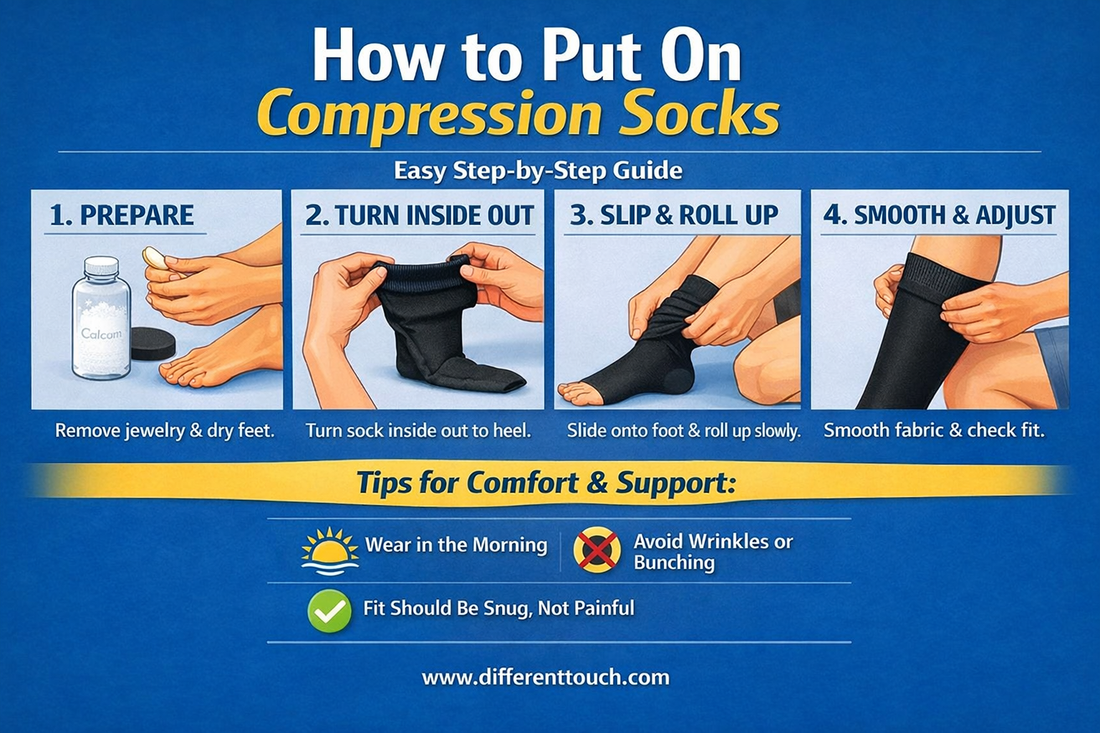
3. Step-by-Step: How to Put On Compression Socks Easily
4. Choosing the Right Compression Sock Style
5. Compression Sock Length Comparison Table
6. Common Mistakes to Avoid
7. How Long Should You Wear Compression Socks
8. Can Compression Socks Be Worn Every Day
9. Washing and Caring for Compression Socks
10. Who Should Be Cautious with Compression Socks
11. Making Compression Socks Part of Everyday Comfort
12. Frequently Asked Questions
Why Properly Wearing Compression Socks Matters
Compression socks work by applying graduated pressure, meaning compression is strongest at the ankle and gradually decreases as it moves up the leg. This design helps promote healthy blood flow back toward the heart.
If compression socks are:
- Twisted
- Bunched
- Rolled incorrectly
- Worn in the wrong size
they can lose effectiveness and feel uncomfortable.
Wearing compression socks correctly ensures:
- Even compression distribution
- Better comfort throughout the day
- Reduced leg fatigue and swelling
- Longer lifespan for the socks
Proper technique turns compression socks from a struggle into a daily comfort essential.
When Is the Best Time to Put On Compression Socks?
The best time to put on compression socks is in the morning, before swelling begins. After a night of rest, legs are typically at their least swollen, making socks easier to put on and more effective throughout the day.
If mornings are not possible:
- Elevate your legs for 10–15 minutes
- Relax the calves before putting socks on
This small step improves comfort and compression effectiveness.
Step-by-Step: How to Put On Compression Socks Easily
Step 1: Prepare Your Legs and Hands
- Make sure your legs are clean and dry
- Remove rings or sharp jewelry
- Trim rough fingernails if needed
Dry skin increases friction. Some people lightly dust their feet with talcum powder or use grip gloves for better control.
Step 2: Turn the Sock Inside Out (Halfway)
Turn the sock inside out up to the heel, leaving the foot portion inside. This reduces resistance and makes placement much easier.
Step 3: Position the Foot Correctly
Slip your foot into the sock and ensure:
- The heel sits directly in the heel pocket
- Toes lie flat and are not cramped
Correct foot alignment ensures even pressure throughout the sock.
Step 4: Gently Roll the Sock Up the Leg
Slowly roll or pull the sock upward in sections:
- Do not yank from the top
- Smooth fabric evenly as you g
- Never fold or roll the cuff down
Compression socks should feel snug but never painful.
Step 5: Smooth and Adjust
Once the sock is fully on:
- Smooth out wrinkles
- Ensure the cuff lies flat
- Check that pressure feels even
If the sock feels uncomfortable, remove and reapply rather than adjusting aggressively.
Choosing the Right Compression Sock Style
Not all compression socks are the same. Choosing the correct sock length plays a major role in comfort, effectiveness, and daily wearability.
Knee-High Compression Socks
Knee-high compression socks provide full lower-leg coverage and are often recommended when fatigue or discomfort affects both the shin and calf.
Explore knee-high compression socks here:
Knee-High Compression Socks Collection
Crew Compression Socks
Crew compression socks offer mid-calf support, making them ideal for moderate activity, office wear, or everyday movement.
Browse crew compression socks here:
Crew Compression Socks Collection
Ankle Compression Socks
Ankle compression socks provide lighter support and are commonly preferred for warm weather or short-duration activity.
See ankle compression socks here:
Ankle Compression Socks Collection
Compression Sock Length Comparison Table
|
Sock Length |
Coverage Area |
Best For |
Support Level |
|
Knee-High |
Ankle to knee |
Shin splints, long standing, travel |
High |
|
Crew |
Ankle to mid-calf |
Daily wear, moderate activity |
Medium |
|
Ankle |
Foot and ankle |
Light support, warm climates |
Light |
Choosing the right length ensures even compression and maximum benefit.
Common Mistakes to Avoid
Avoid these common mistakes to get the most from compression socks:
- Rolling the top cuff down
- Wearing the wrong size
- Pulling forcefully from the top
- Wearing socks with wrinkles or folds
- Putting socks on swollen legs without rest
Each of these reduces effectiveness and comfort.
How Long Should You Wear Compression Socks?
Wear time depends on your lifestyle and needs:
- Work or long standing: All day
- Travel: Entire trip
- Exercise: During and after activity
- Recovery: Several hours post-activity
Remove socks immediately if you feel numbness, tingling, or pain.
Can Compression Socks Be Worn Every Day?
Yes. Many people wear compression socks daily, especially if they:
- Sit or stand for long hours
- Travel frequently
- Want everyday leg comfort
The key is choosing the correct size and compression level.
Washing and Caring for Compression Socks
Proper care helps maintain compression strength:
- Wash in cold water
- Use mild detergent
- Avoid fabric softener
- Air dry or tumble dry low
Heat damages elasticity and reduces compression effectiveness.
Who Should Be Cautious with Compression Socks?
Compression socks are safe for most people, but consult a healthcare professional if you have:
- Peripheral artery disease
- Severe circulation disorders
- Certain diabetic conditions
Comfort and professional guidance should always come first.
Making Compression Socks Part of Everyday Comfort
Compression socks are no longer limited to medical use. Many people now wear them as part of daily wellness routines—at work, while traveling, or during recovery days.
If you’re exploring different support styles and everyday legwear options, you can browse a wide range of socks and comfort essentials at:
Different Touch
Frequently Asked Questions
How do I know if my compression socks fit correctly?
They should feel snug but not painful and should not roll down or leave deep marks.
Is it normal for compression socks to feel tight at first?
Yes, especially around the ankle, but they should never cause pain.
Can compression socks be worn all day?
Yes, many people safely wear them throughout the day for work or travel.
Can compression socks be worn overnight?
Generally no, unless recommended by a healthcare professional.
How often should compression socks be replaced?
Typically every 3–6 months with regular use.
Final Thoughts
Learning how to put on compression socks correctly can completely change your experience. When worn properly, compression socks feel supportive, comfortable, and easy to integrate into daily life.
The right technique, fit, and sock length work together to deliver the benefits compression socks are designed for—without frustration or discomfort.
Whether you’re new to compression socks or refining your routine, taking a few extra moments to put them on the right way makes all the difference.